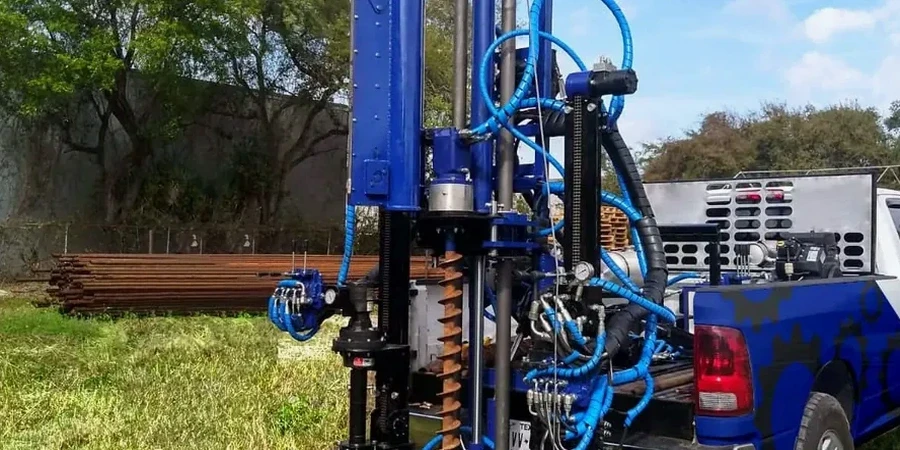
The CME-75 drill rig arrives on site, and the first thing our driller checks is the hammer efficiency. In Mesa, AZ, we run automatic trip hammers calibrated to ASTM D1586 to drive the split-spoon sampler 18 inches into the desert deposits. The Standard Penetration Test counts blows for three 6-inch increments. The N-value—the sum of the last two—goes straight into bearing capacity calculations. We log every foot of recovery because Mesa's subsurface shifts fast: sandy gravels near the Salt River floodplain, cemented caliche layers in east Mesa, and pockets of windblown silt that compact under load. Getting reliable blow counts means matching the rig setup to the actual soil, not just running a default procedure. For deeper profiling in dense sands, we often pair the SPT with a CPT test to define strata boundaries continuously before selecting foundation type.
Energy-corrected N60 values are non-negotiable for liquefaction assessment in Mesa—uncorrected blow counts can understate seismic risk in saturated sands.
Local geotechnical context
Soil conditions in northwest Mesa near the Salt River differ sharply from the granular fans at the base of Usery Mountain. Near the river, we encounter loose, saturated sands that require careful liquefaction screening. Skipping the SPT there means accepting structural settlement risk that insurance carriers in Maricopa County will not cover. In east Mesa, the risk is different: expansive clays beneath a thin crust of caliche. A standard footing design without N-values from depth can lead to differential heave during monsoon season. We have seen slab-on-grade foundations lift two inches in August when the moisture front hits untreated clay. The SPT log tells the design team exactly where that clay layer starts, so they can specify the correct undercut, moisture conditioning, or a retaining wall with proper drainage for below-grade construction.
Common questions
What does an SPT test in Mesa typically cost?
For a standard single-family lot in Mesa, an SPT drilling package with 2-3 boreholes and a geotechnical report runs between US$540 and US$720 per borehole. Deeper commercial borings with liquefaction analysis are priced at the upper end. We deliver a fixed-price proposal after reviewing the site address and project scope.
How deep do you drill for SPT in Mesa?
For residential slabs, we typically drill to 20-30 feet, which covers the zone of influence for standard footings. Commercial projects with deeper loads or basement levels often require 60-foot borings. In areas with known deep sands near the Salt River, we extend to 100 feet to screen for liquefaction per ASCE 7 requirements.
How long does an SPT drilling day take?
A standard residential SPT program with two borings to 30 feet takes one full day on site. Hard caliche layers in east Mesa can add 2-3 hours per boring. We handle utility clearance, traffic control if needed, and site restoration before we leave.
Do I need SPT if I already have a soils report from a neighboring lot?
Soils in Mesa can change radically within a few hundred feet—you might have clean sand and your neighbor has expansive clay. The City of Mesa building department generally requires site-specific geotechnical data. An SPT boring on your actual lot is the only way to get defensible bearing capacity and settlement numbers.