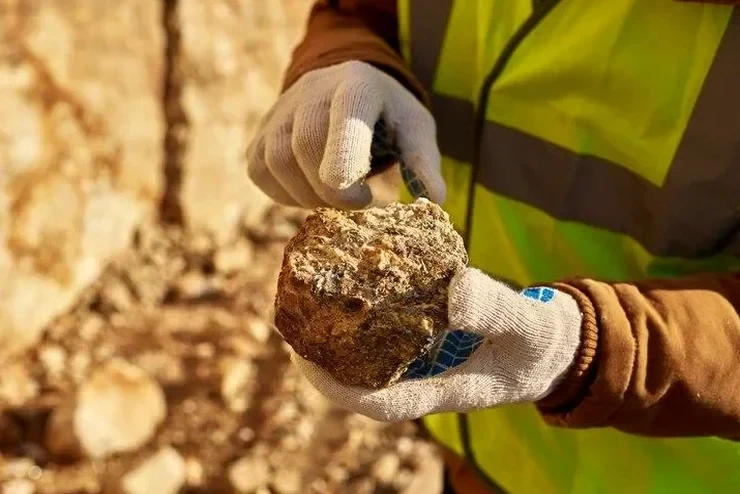
Mesa sits at approximately 1,300 feet above sea level, covering over 138 square miles of the Sonoran Desert. Development across this expansive grid means encountering clay lenses, silty washes, and chemically weathered basin fill. The Atterberg limits test cuts through the guesswork. Liquid limit, plastic limit, and plasticity index define how a fine-grained soil will behave when moisture fluctuates—critical data in a city where monsoon storms can saturate subgrade overnight and irrigation canals thread through older neighborhoods. Mesa's growth from citrus groves to the third‑largest city in Arizona left a patchwork of disturbed ground. In our track record, the plasticity index from a test pit sample often reveals more about expansion potential than any bore log alone, especially near the 202 Red Mountain Freeway corridor where fill composition varies block by block.
In Mesa, a plasticity index over 25 on native basin clay almost always correlates with observable slab distress within five years if left unmitigated.
Regulatory framework
ASTM D4318‑17e1: Standard Test Methods for Liquid Limit, Plastic Limit, and Plasticity Index of Soils, AASHTO T 89: Determining the Liquid Limit of Soils, AASHTO T 90: Determining the Plastic Limit and Plasticity Index of Soils, ASTM D2487: Standard Practice for Classification of Soils for Engineering Purposes (Unified Soil Classification System), IBC Chapter 18: Soils and Foundations
Common questions
What does the plasticity index tell me about my Mesa site?
The plasticity index measures the moisture range over which a soil remains plastic. In Mesa, where we encounter clayey basin fill and silty desert deposits, a PI below 10 generally indicates low shrink‑swell potential, while a PI above 20 suggests a reactive soil that will expand when wet and crack when dry. Values above 30 almost always require mitigation—lime treatment, moisture conditioning, or structural floor systems.
How much does Atterberg limits testing cost in Mesa?
Standard Atterberg limits testing typically runs between US$50 and US$100 per sample, depending on whether you need a one‑point liquid limit or the full multi‑point method with plastic limit. Combined packages that include grain‑size analysis and moisture content reduce the per‑test cost on larger projects.
How long does the test take to complete?
Standard turnaround is three to five business days. The multi‑point liquid limit method requires careful oven drying between determinations, which drives the timeline. We can expedite to 48 hours for critical path items when we receive samples before noon.
Do I need Atterberg limits if my soil is mostly sand?
If the fines content—silt and clay passing the No. 200 sieve—exceeds 12%, the Atterberg limits become relevant even for a sand‑dominant soil. In Mesa, many alluvial sands contain enough cohesive fines to affect compaction and drainage behavior. Running the test confirms whether those fines are silty (low plasticity) or clayey (higher plasticity), which changes your earthwork specification.