← Home · Underground Excavations

Professional Geotechnical Excavation Monitoring in Mesa, AZ

Together, we solve the challenges of tomorrow.

LEARN MORE →

The 2024 International Building Code (IBC) and ASCE 7-22 impose strict observational protocols for deep digs in urban corridors, and Mesa’s unique desert hardpan makes compliance a technical challenge rather than a formality. When a cut exceeds 20 feet or approaches an existing right-of-way in downtown Mesa, the city expects real-time monitoring that validates the shoring design and confirms no adverse movement affects adjacent utilities. Our team runs continuous inclinometer, piezometer, and optical survey arrays to feed a centralized dashboard that the engineer of record reviews daily. Because the caliche layers common east of the 101 can mask settlement until it accelerates suddenly, we also pair geotechnical excavation monitoring with deep-excavations design feedback loops so that shotcrete or tieback schedules adjust before a trend becomes a problem.

In Mesa’s caliche-dominated soil profile, movement rarely announces itself until the cemented crust fractures—continuous inclinometer tracking is the only reliable early-warning system.

Our approach and scope

Mesa’s expansion after the 1950s boom placed miles of infrastructure atop Pleistocene-age alluvial fans composed of interbedded gravel, sand, and cemented caliche. Older parts of town near Main Street sit on undisturbed desert pavement, while neighborhoods pushed toward the Salt River floodplain encounter lenses of compressible silty clay. This patchwork geology means a monitoring plan designed for a site near Mesa Community College won’t transfer to a dig along the Red Mountain Freeway without recalibration. We start each project with a baseline survey that benchmarks neighboring sidewalks, curbs, and gas lines, then install automated total stations tied to reference prisms outside the zone of influence. For sites where vibration-sensitive equipment operates nearby, such as the Banner Desert Medical Center campus, we add triaxial geophones to track peak particle velocity limits recommended in the IBC and referenced in our cpt-test correlations for stiffness profiling. When the excavation reaches design depth, the lateral movement data feed into our slope-stability models to confirm that the benching geometry remains valid under the actual stratigraphy encountered.
Professional Geotechnical Excavation Monitoring in Mesa, AZ
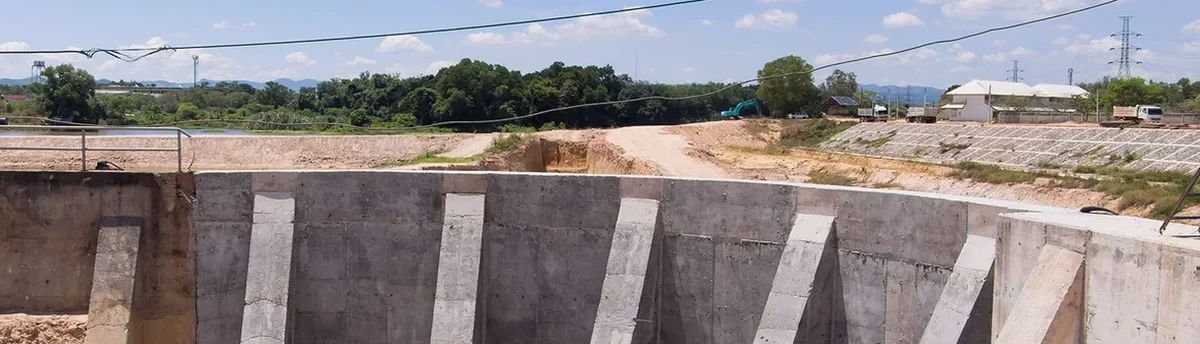
Technical reference image — Mesa

Local geotechnical context

The contrast between Mesa’s bone-dry summer surface and the brief but intense monsoon storms creates a monitoring risk that many teams underestimate. A deep cut that remains stable through May can develop tension cracks within 48 hours of a July thunderstorm, as runoff finds its way into the bench faces and softens the silty seams between caliche strata. We maintain dedicated piezometer nests at multiple depths to catch pore pressure spikes before they trigger a slough failure, and our field technicians perform walk-around inspections within 12 hours of any rainfall exceeding 0.25 inches. In the winter, when nighttime temperatures occasionally dip near freezing on the eastern edge of the city toward the Tonto National Forest, we also check for frost-related loosening in the upper two feet of the excavation face. The combination of automated data streams and human judgment is what distinguishes a legally defensible monitoring record from a simple logbook.

Need a geotechnical assessment?

Reply within 24h.

Email: info@geotechnicalengineering.sbs

Typical values

ParameterTypical value
Monitoring frequency during active excavationHourly automated + daily manual check
Inclinometer accuracy (vertical)±0.25 mm/m cumulative
Settlement point precision0.5 mm over 100 m baseline
Vibration trigger threshold (PPV)0.5 in/sec for historic structures
Piezometer response time< 5 seconds for real-time alerts
Data reporting interval24-hour dashboard update + weekly PDF
Typical monitoring durationExcavation period + 30 days post-backfill

Complementary services

01

Automated Inclinometer & Tiltmeter Arrays

In-place inclinometer chains installed in soldier pile or diaphragm wall casings, streaming live deformation profiles to a web-based platform accessible by the entire design team.

02

Optical Settlement & Uplift Monitoring

High-precision digital level loops tied to deep benchmarks outside the zone of influence, capturing heave under the excavation floor and settlement behind the wall.

03

Vibration & Noise Compliance

Triaxial geophone stations configured to send SMS alerts if blasting or compaction exceeds the PPV limits specified for adjacent hospitals, data centers, or historic properties.

04

Groundwater & Pore Pressure Tracking

Vibrating-wire piezometers at multiple depths that detect perched water buildup after monsoon events, integrated with the excavation dewatering plan.

Regulatory framework

IBC 2024 (Chapter 33 – Safeguards During Construction), ASCE 7-22 (Minimum Design Loads and Associated Criteria for Buildings and Other Structures), ASTM D1586 (Standard Test Method for Standard Penetration Test), OSHA 29 CFR 1926 Subpart P (Excavations)

Common questions

When does the City of Mesa require an excavation monitoring plan?

Mesa’s Development Engineering Division typically triggers monitoring requirements when an excavation exceeds 15 feet in depth or is within a horizontal distance equal to the excavation depth from an existing structure or public right-of-way. Projects in the downtown overlay district or adjacent to critical facilities such as the light rail corridor often face additional scrutiny. The plan must be stamped by a registered geotechnical engineer and submitted with the building permit package.

What does geotechnical excavation monitoring cost for a typical Mesa commercial project?

For a standard 20-foot commercial dig with automated inclinometers, settlement points, and piezometers over a two-month monitoring window, budgets generally range from US$920 to US$2,670 depending on the number of instrument stations and the reporting frequency required. We provide a line-item proposal after reviewing the shoring drawings and the geotechnical baseline report.

What instrumentation is used to track movement in Mesa’s caliche formations?

We rely on in-place inclinometers and tiltmeters for lateral deflection, optical survey prisms for vertical settlement, and vibrating-wire piezometers for pore pressure. In Mesa’s caliche, where movement can be brittle rather than ductile, we set alert thresholds tighter than the typical IBC default and often add a real-time automated total station on sensitive sites.

How long does monitoring continue after the excavation is backfilled?

Most specifications call for monitoring to continue for at least 30 days after backfill reaches final grade, or until readings stabilize within the specified tolerance for two consecutive weekly surveys. For excavations that encountered groundwater or were adjacent to settlement-sensitive structures, we often recommend extending the observation period to 60 days to capture any delayed consolidation.
Location and service area

We serve projects in Mesa and surrounding areas.

View larger map